Tuesday, January 24, 2006

January 24, 2006 - Listening to My Body


The prednisone rush was an odd and somewhat disturbing ride. It lasted into yesterday evening. Hot flashes, feelings of agitation, nagging hunger, difficulty concentrating – all these were the cumulative effects of those four days of heavy medication. Yet by bedtime, life had pretty much returned to an even keel.

This morning I awake feeling rested, and generally more upbeat and confident. Based on what I’ve been told about typical responses to chemotherapy, I’ve been envisioning a slow and steady slide downwards in terms of energy. Maybe it’s the aftereffects of the prednisone, or maybe it’s just that my personal pattern is different, but things seem to be working out a little better for me today.

I’m not practiced at listening to what my body is telling me. Not many of us are, in this culture. We tend to think of the body either instrumentally – as a tool for doing things – or we think of it aesthetically, as something whose main purpose is to be superficially attractive to others. Advertisements invite us and our neighbors to open our wallets and spend money on body-building (Gym membership!) or body-beautifying (Complete makeover!) – but there’s precious little emphasis on living in our bodies, simply and with self-awareness.

What is it that leads me to trust a medical prediction, based on mathematical averages, rather than my own intuitive sense of who I am and what I’m feeling? It’s so easy to lose touch with this physical home of ours – this “earthly tent” in the words of 2 Corinthians 5:1. Yet God has set us in this world as embodied individuals. The boundary-line between flesh and spirit is not so distinct as we sometimes imagine it to be.

Sister Mary José Hobday has spent a lot of time exploring the intersection between Native American spirituality and Christianity. She tells a Native American tale of how, at night, the shadow that follows us around in the brightness of day sometimes detaches itself and goes wandering around on its own. Sometimes the shadow becomes so intrigued by what it’s experiencing that it loses track of time. For that reason, it’s important – just before arising from bed – to softly hum a song that only the shadow will recognize, to guide it home. If a person forgets to perform this simple ritual, it’s possible that the shadow may not return for a while. Then, the day to come will be exceedingly difficult. (Cited in Frederic and Mary Ann Brussat, Spiritual Literacy; Touchstone, 1996, p. 379.)

I must learn to do a better job of humming my shadow home.

Monday, January 23, 2006

January 23, 2006 - In the Zone


For each of the past four mornings, I’ve been taking my prescribed daily dose of the steroid prednisone – 100 mg, which I’m told is a pretty significant amount. I’m done with that now, until my next round of chemo: which is a good thing, because today I’m starting to feel the side effects, and they’re not pleasant.

The first thing I noticed was increased appetite. Feeling vaguely nauseous for the past three or four days, I’ve had little interest in food – until last night, when Claire, Ania and I were sitting in the living room. Ania went off to finish her homework, leaving a half-finished snack bag of cheese doodles on the coffee table. Suddenly I felt like nothing would taste better than a couple of cheese doodles. Next thing I knew, I’d finished the bag. This morning, I made myself a big breakfast of oatmeal, eggs and couple leftover pancakes. Lunch was a frozen portion of lasagna, a buttered bagel and a handful of cookies. I could have eaten much more, but held back out of a sense of caution (the memory of the last few days is too recent).

This is still not a huge amount of food, but compared to what I’ve been eating in the past few days, it’s a feast.

More troubling are the psychological effects of the medicine. This morning I awoke at 5:00 a.m. and couldn’t get back to sleep. I’m jittery, filled with nervous energy, and am feeling anxious about a host of unfinished tasks. But even with all that energy, it’s hard to focus. I’m spinning my wheels: jumping around from one task to another, without getting closure.

I think it was Superman who said to Lex Luthor, or some other comic book villain, “If only he could use his power for good!” That’s the way I feel about my newfound prednisone powers: if only I could channel them – such as in the direction of that stack of unpaid bills I’ve been meaning to get to...

I’m in the Zone now, for sure. I wonder how long it’s going to last?

Sunday, January 22, 2006

January 22, 2006 - Feel It in My Bones


Bone pain. Vanessa in Dr. Lerner's office told us it affects some NHL patients more than others. Now it's here.

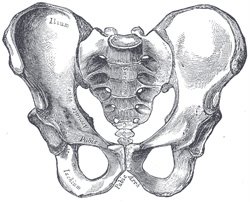
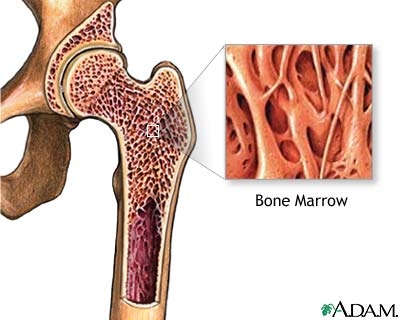
It awakens me in the wee hours of the morning. It's a dull ache – more of a nagging pressure, really, than any actual pain. I feel it right where Vanessa predicted I would: in the pelvis and femur, the largest bones of the body, the places where there are the largest concentrations of marrow.

The marrow-filled centers of these thick bones are the body's blood-cell factories. The Neulasta shot I had on Friday is supposed to jump-start the production of white blood cells, and that – I hope and pray – seems to be exactly what's happening.

The silence of the cavernous, World War 2 aircraft factory is shattered, as the foreman throws the switch on the mercury-vapor lamps that sizzle for a moment, then burst into light. The doors crash open, and hordes of third-shift Rosie the Riveters pour in, clad in their overalls, to keep the B-29s rolling off the assembly line around the clock. It's an ungodly hour to be working, but there's nothing to be done about it. There's a war going on – a war against cancer.

Yes! I say to myself, as I shift position in bed, trying to get more comfortable. The treatment's working. The war birds are rolling off the assembly line. The white blood cells are under construction.

I'm developing a somewhat different attitude towards pain as I journey, day by day and night by night, through this disease. Normal thinking is turned on its head. It's not the lymphoma that's causing me the pain, fatigue and nausea. It's the treatment.

The lymphoma is a wily, stealth attacker, silently soaring without lights like some teflon-covered spy plane, insinuating itself into my very DNA. It's not the assailant, but the treatment the doctor's administering to fight the assailant, that's making me uncomfortable.

I'm a relatively unusual NHL patient, in that my disease was diagnosed accidentally, before I'd developed any symptoms. As we first sat down with Dr. Lerner to talk about chemotherapy, I was very much aware that I'd been walking around performing all my normal activities. Sure, in retrospect I could recall that something hadn't been right for a while – I'd been feeling a little tired, and I was getting concerned about a vague, tight feeling in my abdomen (the same feeling that could have subconsciously inspired me to ask Dr. Cheli, our family physician, about an aortal aneurysm) – but these feelings were barely on the radar screen for me. They weren't interfering with my life.

Yet in signing up for a treatment regime that includes the surgical insertion of what is, essentially, a high-tech funnel so noxious chemicals can be poured into my body, altering the fundamental structure of my cells, I was volunteering for hardship duty.

And so, when the pain comes, I take it as a sign that I'm getting better. Any other pain would be exactly the opposite. The lingering pain from my porta-cath surgery, for example, is slowly diminishing day by day. When I stand in the shower and lift my right arm, I can feel the swollen scar tissue pulling. Yet, with each day that goes by, the pain from that wound is incrementally less, and I celebrate its diminishment.

Not so with the bone pain, nausea and fatigue brought on by the chemotherapy. As each day unfolds, bringing me closer to my nadir point ten or eleven days after receiving the drugs, the discomfort can be expected to increase. While I dread the mounting side effects because of the way they'll make me feel, there's also a part of me that wants to cheer their progress.

It's a kind of therapeutic pain – and therefore, it defies the usual logic of pain. I need to go through this, I tell myself. I need to endure it. It's going to make me well.

In one of the strangest and most oddly beautiful poems ever written in the English language, the Elizabethan-era Anglican priest John Donne invites God into his life with an almost masochistic glee – not to comfort him, but to assault him:

"Batter my heart, three person'd God; for, you
As yet but knocke, breathe, shine, and seeke to mend;
That I may rise, and stand, o'erthrow mee, and bend
Your force, to breake, blow, burn and make me new."

Donne ends his poem by saying,

"Divorce mee, untie, or breake that knot againe,
Take mee to you, imprison mee, for I
Except you enthrall mee, never shall be free,
Nor ever chast, except you ravish mee."

(From Holy Sonnet XIV)

It's the sort of twisted, Mobius-strip logic a cancer survivor would understand.

Saturday, January 21, 2006

January 21, 2006 - Limits


Except for the Thursday-morning staff meeting, I've stayed home all week, communicating with people by telephone and e-mail, doing what ministry I can in vicarious ways. My main goal has been preaching tomorrow, at our Sunday services. I've figured that I could probably pace myself well enough to get through those two one-hour worship services, even if I had to go home and crash immediately afterwards.

What I haven't counted on is the progressive deterioration of energy that is the result of the chemo treatments. I've heard our friends Don and Charlotte talk about this, and have grasped the concept in the abstract, but somehow I didn't fully understand what it feels like until now, as I'm living through it, day by day.

If I felt tomorrow the way I felt yesterday, I could have done it. But I knew almost immediately, after getting up this morning, that I felt just a little bit worse. With the known effects of the medication, I can expect to feel incrementally worse tomorrow, and the next day, and the next – until I finally reach that nadir point, after which I can expect to gradually feel better.

So I've asked Claire to activate our backup plan, and preach for me tomorrow. She's a Presbyterian minister like me, but works as a hospice chaplain rather than in a local church. She does a fair bit of supply preaching among the churches of Monmouth Presbytery, filling in for ministers on vacation. There was a time, before Robin was called as our associate pastor, when Claire was on the paid staff of our church, so our people know her well – not only as their pastor's wife, but also as a minister in her own right. She's a very good preacher, and will do a fine job – I have absolutely no worries there.

It's just so hard to let go. More than any other ministry activity, preaching is what I do. It's at the heart of my personhood and sense of calling. If God has called me to do this work, then why would God call me out of it for a time – not to do something else, but rather to just be sick? It's a mystery.

Two summers ago, I had a wonderful, three-month sabbatical, funded by a generous grant from the Lilly Endowment. I spent time at a Benedictine monastery in New Mexico, went away to our cabin in the Adirondacks for a number of weeks to work on some writing projects, and traveled with Claire and Ania to Ireland and Scotland. After nearly fifteen years of serving this church, it was good to get away and focus my energies on some other things for a season. The terms of the Lilly grant provided some money for the church to hire a retired minister from our Presbytery to fill in and assist Robin with various tasks, so my temporary absence wasn't too much of a burden to others.

But this is different. There's no sabbatical grant to pick up the slack. My absence is surely beginning to be a burden on others. But it is what it is. I'm grateful that the church staff and leaders have been so understanding, and so willing to go the extra mile to cover for me.

In 2 Corinthians 12, the Apostle Paul speaks of a mysterious "thorn in the flesh" that tormented him for a time. No one knows what he meant by that phrase, exactly, but it was evidently some physical complaint that was very troubling. He turned to God in prayer: "Three times I appealed to the Lord about this, that it would leave me, but he said to me, ‘My grace is sufficient for you, for power is made perfect in weakness.' So, I will boast all the more gladly of my weaknesses, so that the power of Christ may dwell in me" (2 Cor. 12:8-9).

I'm not doing much boasting these days, and certainly not of my weaknesses. But maybe someday, by God's grace, I will learn how to do so.

Friday, January 20, 2006

January 20, 2006 - A New View of the Supermarket


After a quick trip to the doctor’s office for my Neulasta injection (the drug that fights the chemo drugs’ suppression of white blood cells), I return home for a meeting with Lynn, a member of our church who’s a licensed dietician and counselor. She’s offered to help me look at some dietary issues.

Lynn sits down with me in our living room, takes out a pad and begins asking questions about my dietary habits and preferences – both before I began treatment, and in the last day or two as I’ve been starting to experience the chemotherapy side effects.

I confess some of my past sins – too much fast food, a fondness of potato chips and late-night ice cream snacks, and overeating generally. These have led to problems with obesity that have plagued me all my life. I’ve never been a binge eater, but as a baby-boomer child I so internalized my Depression-era parents’ strictures about cleaning my plate that I’ve tended to keep eating till well past the point of fullness. But now is not the time to address those problems. The goal of a chemotherapy diet is to maintain weight, because unhealthy weight loss is such a common result of the chemo medicines themselves (not to mention the feelings of nausea that suppress appetite).

Actually, if I do manage to lose some weight as a result of all this, that would probably be the only thing that could be said in favor of undergoing the rigors of chemotherapy. (I remember reading somewhere about a cancer survivor who used to joke about her very successful $30,000 diet program.) But Lynn and I are agreed – the immediate health concerns of maintaining caloric intake, protein and vitamins are paramount.

Vanessa, the nurse in Dr. Lerner’s office who gave Claire and me our orientation to chemotherapy, touched on some dietary issues – mostly around subjects like preventing mouth sores and avoiding infections. I’ve been following her instructions of using a homemade salt, baking soda and water mouthwash six times daily, and am ready to cut out orange juice and other acidic foods at the first sign of sores. I’m also avoiding all mouthwashes that contain alcohol, and have switched to a soft-bristled toothbrush. Vanessa also instructed that, in times when my white blood cell count is down, I should follow standard traveler’s instructions for eating raw fruit in tropical countries – eat only what fruit you can peel. In times of severe stomach upset or diarrhea, Vanessa recommends the “BRAT” diet – bananas, rice, applesauce and toast.

Lynn’s advice is more comprehensive, and oriented to the day-to-day decisions that need to be made in the supermarket and the kitchen. She starts with my past eating patterns, and encourages me to build on my strengths. I’ve never been a breakfast-skipper, for example. Since – in the past few days, at least – I’ve found that my appetite is strongest in the morning, she encourages me to start with a big breakfast. As for the rest of the day, she encourages me to eat frequent, smaller meals – keeping a little something in my stomach all the time, to prevent queasy feelings. I also need to minimize fatty foods that are harder to digest. Lynn explains that dairy products can also be hard to deal with in times of nausea and diarrhea, so she encourages me to try soy milk instead. Yogurt is OK, too, as long as the container says “active yogurt cultures.”

In times when eating is very difficult, she encourages me to try making some fruity blender shakes, with soy milk, honey, fruit juices, banana and a little wheat germ.

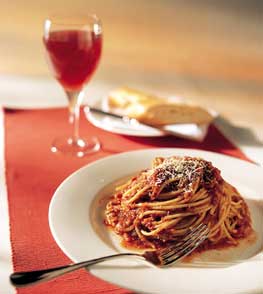
Tomato-based foods are out, because of mouth-sore issues and also because they can cause stomach upset. I should also avoid very spicy foods.

In times of nausea, it’s a good idea to stay out of the kitchen while food is being cooked, as food odors can cause lack of appetite. Better to have some pre-prepared meals that can be heated up quickly in a microwave.

I show Lynn a booklet Vanessa gave us, published by the National Cancer Institute. It’s called Eating Hints for Cancer Patients: Before, During and After Treatment (U.S. Department of Health and Human Services, 1997), and is also available online. Lynn pages through this, and gives it her seal of approval.

Because she’s also a member of the church, Lynn offers to get some volunteers together to bring our family some prepared meals. While it feels odd to be on the receiving end of this sort of kindness, I put my pride aside and agree. Because of my flexible schedule, I’ve been doing nearly all the grocery-shopping, and have also taken my place in our weekly family cooking rota. Now that I’m sick, I won’t be able to help in these ways, and Claire’s hospice-visitation schedule often keeps her busy into the late afternoons and sometimes evenings. Yes, some ready-to-cook meals would be a help.

I explain the further complexities of food issues in our household – how Ben, Ania and our nephew Cory are vegetarians, and Claire is more of a vegetarian by preference than principle, but I’m most emphatically not. This has made meal planning inordinately difficult for the past couple of years, ever since the kids announced their dietary scruples. Some of the entrees people would ordinarily be inclined to bring as meals-on-wheels offerings (one-dish casseroles with bits of meat cut up in them) would probably end up being wasted. If there’s meat, it would have to be kept to the side, for me to add later to my portion. Add to the mix my newfound issues with tomato sauces and spicy foods – which our family generally loves, but which I have to swear off – and things get pretty complicated. Lynn says she’ll explain all this to the people she talks to.

She leaves me with her list of written suggestions, and encourages me to stay in touch. It’s good to know I’ve got an ally like her, who can help us chart a simple and healthy course.

I go into the kitchen and make lunch – scrambled eggs and toast. I’m feeling tired, but I also feel inspired by Lynn’s suggestions, so I decide to head off to the supermarket. I know I could just make Claire a shopping list and she’d cheerfully pick up whatever I need, but somehow I feel the need to push the cart up and down the aisle myself, look at what’s on the shelves with a new eye, and think carefully about what sorts of foods appeal to me now. Besides, I know that once I’m into that second week after treatment – the “nadir,” they called it, back in Dr. Lerner’s office, when I’m watching my blood counts fall (and my hair, besides) – I probably won’t have the inclination or energy to walk down a supermarket aisle. So, it’s now or never.

I’m struck with how many shelves I pass by, with hardly a second thought: milk, cheese and other dairy products, Italian tomato-sauce dishes, anything spicy – these no longer have any appeal. It’s not like going on a regular diet. When trying to lose weight in the past, I would mournfully pass up whatever forbidden fruit was on the list (well, it was rarely the fruit that was forbidden). Now I simply don’t want the things on my new blacklist: I intuitively know that these foods would make me feel even sicker. I reach for the soy milk, the yogurts, the little lunchbox containers of applesauce, the bland, starchy items like couscous and cream of wheat – and am thankful to have them available to place in the cart. Over in the frozen-food section, I select a few bland, ready-made meals like chicken and rice – good for those occasions when the family is dining on take-out pizza or Mexican food and I must abstain.

The supermarket looks very different to me now. I’ve always been very aware that we Americans have an absurdly large range of food choices in general, compared to the Third World – but now I feel a little like I’ve joined a sort of chemo Fourth World. It’s just one more way that cancer can be an isolating experience.

Thursday, January 19, 2006

January 19, 2006 - Peaks and Valleys, Mostly Valleys


My first day after my first chemotherapy is a day of peaks and valleys. I sleep rather well until about 4:30 a.m., after which I can’t sleep any longer. I get up and go sit in front of the computer, intending to read through some e-mail. I quickly get distracted by some cancer-information websites – as Broyard says, something about this illness is intoxicating – where I rather obsessively look up more details about drug side-effects. Before I know it, Claire and the kids are stirring.

Claire helps me tape a plastic Baggie over the surgical incision, so I can take my first shower since the surgery (I was told to wait at least 24 hours, which have now passed, but I still want to keep the wound as dry as I can). It feels good to get clean again, and it feels even better to come downstairs and eat a bowl of oatmeal Claire prepared for me (usually I get my own breakfast, but if one of the few advantages of being sick is having people wait on you, I’ll take it).

Then, it’s upstairs to the bathroom again to take my morning cancer meds – the allopurinol and, for the first time, the prednisone. I’m supposed to take five of these daily for four days. I gulp them down, one by one, noting a slightly bitter taste – but then the bitterness seems to linger and intensify at the back of my throat. I’d been told these things were kind of nasty, and now I see why. The taste dissipates after a few minutes, though, and a little while later I feel good enough to walk across the street to the church in time for our weekly staff meeting.

The folks there are a little surprised to see me. They know what’s been going on, from reading my blog and talking to each other, but they also know we’re playing this thing one day at a time. We open with prayer, and go through our usual routine of comparing calendars and offering each other a chance to bring up matters of concern. I find I have to excuse myself a couple of times for quick trips to the rest room, as my body continues to try to flush the chemo meds out of my system. (Gosh, I think to myself, if I’m trying to lead worship on Sunday morning and I’m like this, I’ll never get through the one-hour service without a rest-room break, maybe even two!)

By the time we get to the time at the end when Robin and I typically spend some individual time together, I’ve got another problem. Suddenly, I’m feeling wiped out. It’s about 10:30 a.m., and I can hardly keep my eyes open. She and I handle our most essential business, before I excuse myself and go home to spend a couple of hours lolling on the couch in front of the TV. I’m not tired enough to sleep, but I’m not energetic enough to do much of anything. Not only that, I start to feel a bit queasy, so I take one of the compazine tablets (my backup anti-nausea medicine). The feeling passes, but I’m left with a nagging headache. Always a trade-off, it seems, when you’re taking medicines to offset the effects of other medicines.

If this is what my chemotherapy season is going to be like, It’s going to be a long four and a half months. So far the Aloxi (and now the compazine) seem to be doing their job of fending off the nausea, allowing me to achieve a sort of gray equilibrium. I don’t feel terribly sick, nor do I feel like I’m really living. And this is just the beginning. They say the second week after the chemo treatment is the worst.

Short bursts. Maybe that’s the only form of energy I’ll have. If I can’t predict when they’ll come or for how long, though, it’s going to be hard to lead anything resembling a normal life. That means others won’t be able to depend on me. I’ll show up when I can show up, and do what little I can. That’s not the way the super-responsible me is used to living.

Yesterday I was sitting in the chemotherapy lounge chair, fitfully reading a book I’d brought with me. It’s called Now That I Have Cancer, I Am Whole, by John Robert McFarland (Andrews and McMeel, 1993). A friend and colleague in ministry, Suzanne, sent it to me. The author is a friend of hers, a Methodist minister who’s a colon cancer survivor. Suzanne told me John intentionally made the readings short and pithy – just right for reading during chemotherapy, he told her. One of the meditations is called by the rather humdrum title, "...I do something each day." In it, the author muses – as I have been musing today – on how little he can do: "something every day," he says, is about the only goal he can manage. Here’s more:

"My ‘something’ each day is now more important than the masses of things I used to do. Whether I live long or short, in pain or without pain, I have one thing to do each day, regardless of how many ways that one thing may be expressed. Into each letter, each phone call, each washed dish, I put the full measure of all my love. I think by doing well, I’m helping myself get well, but that’s not the point. Soren Kierkegaard wrote that ‘purity of heart is to will one thing.’ Whether it’s a home run or a sacrifice bunt, my turn at bat is to do one thing, to love."

Maybe that’s the lesson cancer teaches.

Wednesday, January 18, 2006

January 18, 2006 - Chemo 1


A night of sleep has worked wonders for me. I’m not exactly energetic, the morning after my surgery, but the porta-cath incision feels less painful. Claire and I drive over to Dr. Lerner’s office for our 9:20 a.m. chemotherapy appointment.

The first person we see is Diane, one of the chemotherapy nurses. Diane finds the porta-cath under my skin without too much difficulty – Dr. Gornish, the surgeon, has very helpfully penned an “X” to mark the spot – and inserts the IV needle. It hurts just a little more than the arm-pricks I’ve been getting, and she assures me that, once the surgical wound is fully healed, I’ll feel even less pain.

Dr. Lerner meets with us then, and explains the chemotherapy in detail. I learn that I’ve already made my first medication mistake: evidently I was supposed to start taking the allopurinol (the gout-preventing medicine) a couple of days before the first chemo treatment, not on the day of the treatment. Claire says she recalls this instruction, but I sure don’t: brain overload, I think. Dr. Lerner says not to worry: just take one today and double up with a second one this evening, then return to the daily dose. He’s evidently not going to stop this chemotherapy train, now that it’s finally ready to leave the station. We’re close enough to home that I ask Claire to drive and get the allopurinol prescription bottle for me, so I can take it that much sooner – and she very helpfully does so, before heading off to work.

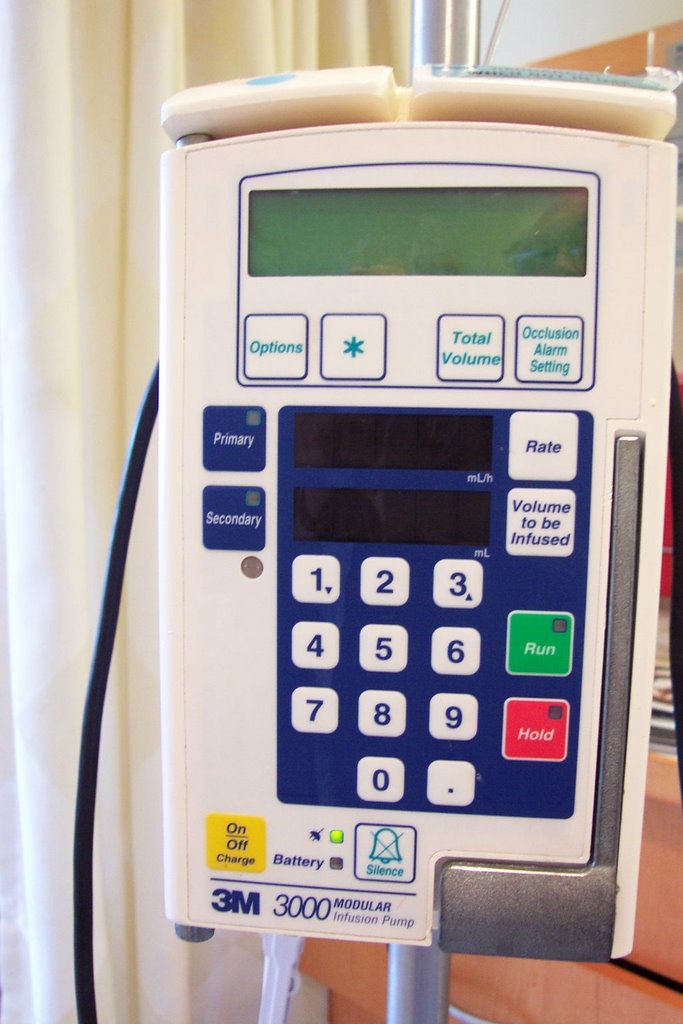
When we’re finished talking with Dr. Lerner, Diane leads me back to a small room, equipped with a comfortable lounge chair, IV pump and a television/VCR player. There’s a nice view out the window, looking across to the Silton Swim School, the pool where our daughter, Ania, took her swimming lessons years ago (although on this blustery, rainy winter day, who’s thinking about swimming?). I will soon come to appreciate the lounge chair with its electric-powered recliner and the television set: I’m going to be in this chair for more than eight hours today. (The chemo patient in the chair pictured here is nobody I know; it's just a photo I found in a Google image search. The chair looks just like the one I was using.)

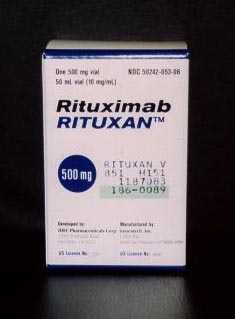
First comes Benadryl, the antihistamine, administered through a small IV drip bag. This is to minimize possible allergic reactions to Rituxan. Next comes Aloxi, an anti-nausea medication, injected directly into the IV line. This is supposed to give me five days or so of anti-nausea protection. I sure hope it works.

Then comes Rituxan, the monoclonal antibody therapy. This takes by far the longest time of any of the medications I’ll receive today. Dr. Lerner has explained that the first Rituxan treatment must be administered gradually, so as to avoid the fever-and-chills side effects that often afflict first-time patients. Sure enough, after an hour or so of the medication I start to feel warm. When I tell Diane about it, she backs off the medication for a while, then re-starts it at a lower level. Throughout the rest of the day, the chemo nurses will gradually ramp the dose up, so as to empty the entire IV bag, carefully checking me for fever symptoms all the while.

I sit in the chair and try to read, although I feel exhausted and spend a good bit of time dozing. I read in dribs and drabs, watch some television and doze some more. Because the staff has been encouraging me to drink plenty of fluids, I need to make frequent trips down the hall to the bathroom, calling the nurse to unplug the IV pump, so I can push it ahead of me down the hall. I feel like a little kid again, having to ask permission to go to the rest room.

We’ve been clued in to bring a lunch, so from time to time I dip into the lunch bag Claire helpfully packed for me. I’m not feeling like eating very much, so I space it out through the whole afternoon.

Finally, close to 5:00 p.m., the Rituxan is finished. Now, on to CHOP. This takes far less time than I expected. Two of the CHOP medications, adriamycin and vincristine, are administered directly into the IV tube, using a large syringe. Kay (the late-shift nurse who’s taken over from Diane) explains that she has to be very careful with the bright red adriamycin, because if it should spill onto the skin, its caustic effects can cause burns so severe that plastic surgery could be required. I wonder how the stuff doesn’t cause harm to the veins through which it passes – although I suppose it’s sufficiently diluted by the blood at that point.

Claire comes back in about the time I’m starting to receive the third chemo medicine, cytoxin. This stuff comes in a smaller IV drip bag, and it takes much less time to empty this one. This one irritates the bladder, Kay tells me, so I’ve got to keep pushing the fluids after I go home. The fourth CHOP medication, the steroid prednisone, is in pill form; I’ll start taking that one tomorrow morning, at home, and continue it daily for four days.

We finally finish at about 6:30. The last thing I do is make an appointment to return briefly to the office on Friday morning for an injection of Neulasta, a medication that encourages the production of white blood cells (a necessary corrective to the chemotherapy, which by then will be starting to depress the numbers of those cells).

After today, I’m more aware than ever what a slow-motion cure chemotherapy is. It took me a solid day just to receive the medications (although Diane assures me that, now that my body is used to Rituxan, future treatments will go more quickly). It’s going to be three more weeks till the next one. In the intervening time, I’ll come to experience the side effects: perhaps some nausea after the five-day dose of Aloxi wears off; hair loss beginning around day 13; and whatever other treats I may be in for.

My chemotherapy journey has begun.

January 17, 2006 - On the Gurney

I’m lying on a gurney in the Same Day Surgery staging area at Ocean Medical Center, with Claire by my side, as Robin, our church’s associate pastor, shows up. Her timing is perfect: I’m all ready to go into the operating room, to have the porta-cath implanted. For me, the prayer she offers is symbolic of a whole lot of prayers that are being offered for me today and tomorrow, by a whole lot of people. Thanks, Robin.

An orderly shows up, telling me it’s time to go. I say goodbye to Claire; the last thing I tell her is that I love her. (I fully intend to come back, of course, but it seems like the right thing to say under the circumstances.) Suitably attired for my journey in a hospital gown and one of those puffy, disposable hats with elastic around the bottom – as much of a hair net as it is a hat – I begin my brief trip through the hospital corridors.

My feet-first perspective from the gurney is an odd one. Everything – the smooth ride, the automatic doors that open at the touch of a button, my recollection of the friendly and efficient preparation by the Same Day Surgery staff I’ve just received – indicates that I’m now part of a vast and well-thought-out system. Human bodies are the focus of this system – living human bodies, transported on a journey of healing.

Although, as pastor of a local church, I know this hospital well, I’ve now entered parts of the complex that are completely unfamiliar to me: the backstage, “authorized personnel only” areas of Surgery. There’s a kind of anonymity to the people we pass in the hallways back here – attired as they are in surgical scrubs, most of them with masks still in place. Odd images flash into my mind, things I glimpse from the corner of my eye: a gray plastic box on a set of metal storage shelves on which is written “total hip,” a stack of similar plastic boxes, each of them labeled “foot.” Surely these contain some sort of surgical supplies, and not the Frankensteinian array of replacement body parts that immediately comes to mind. Funny thing about the medical profession – sometimes in order to achieve wholeness, there must be this relentless focus on the constituent parts.

They park me in the hallway outside the operating room, where I lie for a few minutes, fidgeting. Everything’s nearly ready, a nurse anonymously assures me from behind her surgical mask. I look to my right and see a small, glass-fronted wall cabinet beside me. Behind the glass door is an orderly column of stainless-steel tubes, tagged with colorful labels: “oxygen,” “hospital air,” “evacuation,” “waste,” “vacuum.” Everything’s got its designated conduit in the surgical system, right down to the gases and the bodily fluids.

They wheel me in, and I feel the same, much-colder temperature I recall from my two previous visits to operating rooms. (Why is it that operating rooms are always cold? I’ll make a mental note to ask someone about that, sometime.) Using a pneumatic foot pump, someone pumps my gurney up to the level of the narrow operating table to my right. When instructed, I slide over onto this “bed,” which is really more like a cloth-covered board. There’s no place to put my arms, I realize – but then a nurse swings over a couple of armrests, first for one arm then for the other. My position, now, is disturbingly cruciform. I try not to think of the associations.

To my left I see a technician in surgical scrubs and mask, sitting in the driver’s seat of some kind of wheeled device that reminds me, for some reason, of a forklift. When I ask what that is, someone tells me it’s an x-ray machine. I recall that Dr. Gornish had told me they would be taking a chest x-ray afterwards, to make sure the device has been placed properly.

The anesthesiologist, seated behind me, drapes an oxygen tube over my face. This is it, I think to myself. The moment of unconsciousness. It’s almost here. I stare up at the large lamp directly overhead, and wait.

At some point the anesthesiologist starts the drip going into my IV. The transition is so gradual (or maybe, so sudden) that I’m unaware of the precise moment I slip out of consciousness. At odd moments, though, I’m disturbingly aware of pain. I have distinct memories of wincing, and telling the operating room staff that it hurts – not once, but several times. The next coherent memory I have is of lying in the recovery room, and feeling angry about the pain. It wasn’t supposed to have hurt like that, I tell myself. I was supposed to be sleeping.

When I mention it to a nurse, she asks if I’d like to speak to the senior anesthesiologist about it – this is not the doctor who worked with me, but another doctor. I ask him about the pain, and he apologizes for my discomfort, but explains that the anesthesia is based on complex calculations that are made even more complex by my comparatively large body mass. I had "sedation," he explains, rather than full anesthesia with intubation (at least that’s what I think I recall him saying this next morning, as I write these words; my thinking was still a little foggy from the aftereffects of the stuff). They need to be very careful that I get just enough anesthetic, and not too much, the doctor explains. I’m left with the impression that the anesthesiologist took his best shot with the numbers, then as the pain pulled me briefly out of my twilight sleep, he made small adjustments to put me under again.

Later, Claire tells me that Dr. Gornish explained to her that the difficulty was related to my sleep apnea. The anesthesiologist, seeing that I had begun having apnea episodes, evidently cut back on the anesthesia a little bit in order to get me breathing again, which is when I began to feel pain. Mental note: whenever I have to undergo surgery again, I’m going to ask if there’s any reason why I can’t bring the BiPap machine (which I use successfully each night to prevent apnea) with me into the operating room. The BiPap’s plastic face mask does include a little valve to which an oxygen tube can be hooked up. I have no way of knowing whether this equipment is suitable for the operating room, but believe me, next time I’m going to ask very specifically about it.

Alternatively, it may be that, due to my sleep apnea, I’m not a good candidate for "sedation" anesthesia, but may require full intubation, which as I understand it keeps the airway open by its very nature.

Over my years of hospital visitation, I’ve heard other patients speak of this experience of waking up on the operating table – not many, but a few. I suppose I’m in that small, unlucky percentage. My memories of the pain are real, but fragmentary, and by the time I get home have become rather blurred. I sit up for a while watching television, my take-home ice pack draped across my shoulder so as to cover the area of the surgery near my collarbone. My head is throbbing from the Percocets I’ve been taking, "as needed." I decide that my "need" is now diminished enough to stop taking those. I’ve never had a very good reaction to that kind of pain-killer – although I know some addictive personalities swear by the stuff, and have made the tablets into a lucrative street drug. Frankly, I can’t see the appeal. Deciding to go it with Tylenol alone from here on in, I head for bed.

Monday, January 16, 2006

January 16, 2006 - Courage


Today is the birthday of Martin Luther King, Jr., so I’m thinking about courage.

Somebody told me recently, at the church door, that she thinks I have a lot of courage in facing cancer the way I am. I appreciate the affirmation, but that’s not the word I would have chosen. I don’t feel especially courageous as I go about the business of preparing for treatment. It’s just what has to be done - and, if truth be told, I'm feeling plenty frightened about it.

It’s not uncommon for people to attribute courage to those fighting major illnesses – although I think that, in many cases, it may be more of a projection of the speaker’s own feelings and aspirations than a description of reality.

By the same token, when an athlete hobbles off to the locker room for treatment after being knocked temporarily senseless on the playing field, the stadium crowd typically responds with thunderous applause. Sometimes the sportscasters will say something like, “Just look at that the way that young man got up again – what courage!”

Is it really courage to get up again, after being knocked down? What’s the alternative?

True courage, I think, is when there is an alternative, and a person voluntarily chooses the course that could lead to suffering, for the sake of others. Often this suffering is an example of what Jesus calls, in the Beatitudes, “persecution for righteousness’ sake” (Matthew 5:10). Firefighters climbing the World Trade Center staircase: that’s courage. Soldiers going into battle to fight for worthy ideals and defend their comrades: that’s courage. A woman defying her abusive husband and seeking a restraining order to protect her children: that’s courage.

But seeking medical treatment, however painful or unpleasant it may be, in order to avoid even worse suffering – is that courage? I’m not so sure it is. It may be determination, or resignation, or even common sense – but it’s hardly courage.

Now what Dr. King decided to do each day of his life, in those last years – putting his life on the line to continue the struggle for justice – that’s courage. King knew the risks he was facing, as he acknowledged in a speech the day before he was assassinated:


“And then I got into Memphis, and some began to say the threats – or talk about the threats – that were out, what would happen to me from some of our white sick brothers. Well, I don't know what will happen now. We've got some difficult days ahead. But it doesn't matter with me now, because I have been to the mountaintop. And I don't mind. Like anybody I would like to live – a long life – longevity has its place. But I'm not concerned about that now; I just want to do God's will.... So I'm happy tonight! I'm not worried about anything! I'm not fearing any man! Mine eyes have seen the glory of the coming of the Lord!”

I hope I find sufficient courage to face my treatments and their side-effects with equanimity. Yet even if I don’t feel a sense of peace about it, I’m still going to undergo them. There’s no alternative. Such courage as I may find will surely be more of a gift from God than anything I already have in me.

These hymn stanzas (from William Cowper’s 1774 hymn, “God Moves In a Mysterious Way”) speak of courage as God’s gift:

“Ye fearful saints, fresh courage take;
The clouds ye so much dread
Are big with mercy and shall break
In blessings on your head.

Blind unbelief is sure to err
And scan His work in vain;
God is His own interpreter,
And He will make it plain.”

Sunday, January 15, 2006

January 15, 2006 - Growth Is Optional


Today I’m thinking about a bumper sticker I see from time to time. It says, "Change is Inevitable. Growth is Optional."

For me, there surely are changes ahead. This morning I awoke in the wee hours and had a hard time going back to sleep, because those changes were preying on my mind. This coming Wednesday I’m going to spend the better part of my day sitting in a lounge chair in the doctor’s office, receiving 4 or 5 hours of Rituxan monoclonal antibody treatment, followed immediately thereafter by an hour or two of CHOP chemotherapy. As I get up from that chair to leave the doctor’s office, I will be a different person. I will have become a chemotherapy veteran.

Chemo changes the human body forever. The most widely-feared side effects of these medicines – fatigue, hair loss, nausea, mouth sores and the like – are transitory, but there is also the possibility of long-term effects. Some patients report that the fatigue associated with chemotherapy continues long after the treatments are ended. Both cyclophosphamide (also called cytoxan – the "C" in the CHOP acronym) and adriamycin (alternate name hydroxydoxorubicin – the "H") can damage the heart. Cyclophosphamide can also damage the bladder. Vincristine (or Oncovin – the "O") causes temporary neuropathy (tingling in the fingertips) that in some patients can become permanent. Prednisone (the "P") can permanently change the distribution of body fat, leading to changes in appearance. While only a minority of chemo patients experience any of these long-term effects, the possibility is still there.

Elizabeth Adler reports that, paradoxically, some of the lymphoma chemo treatments can themselves cause cancer further down the road (Living With Lymphoma, p. 90). This is truly ironic, but it’s a reality. A small but significant percentage of NHL chemo veterans will later come down with cancers like nonlymphocytic leukemia. Using these medicines is worth the risk, though, because the benefits of treating the lymphoma far outweigh the statistically much-smaller risk of secondary cancers.

Even though the chance of my undergoing permanent physical changes as a result of these drugs is relatively low, the possibility of those changes remains. And that in itself is a change. As a chemo veteran, I will forever after be inclined to wonder whether some future medical problem I experience is the result of my 2006 treatments. I’ll be like those Vietnam veterans who were sprayed with Agent Orange: I’ll never know for sure.

It’s also a fact that certain clinical trials (experimental treatments) are limited to those who have never received chemotherapy before. After this Wednesday, I will be ineligible for these. I will no longer be a chemotherapy virgin.

More than any other treatments I’ll receive in the future, I’m looking on this Wednesday’s experience as a threshold event. I will be crossing over into the world of chemotherapy, never to return.

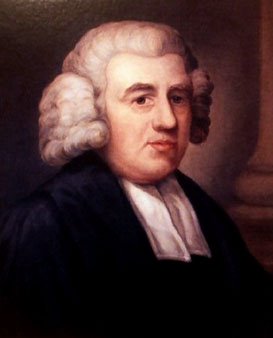
I am reminded of a different spin on this whole issue of change as I read today’s blog entry written by my new friend Tarun Jacob – the young Indian physician who’s also receiving chemotherapy for NHL. After a "down" day of experiencing some pretty bad side effects, Tarun quotes the words of John Newton:

"I am not what I want to be.
I am not what I hope to be.
I am not what I ought to be.
But still, I am not what I used to be.
And by the grace of God,
I am what I am."

Newton, of course, is best known as the author of the beloved hymn, "Amazing Grace." In that hymn, Newton famously describes himself as "a wretch" who – before coming to a renewed commitment to Jesus Christ – "once was lost, but now am found; was blind, but now I see." For some people to deploy words such as these would seem overly theatrical – but, considering the facts of Newton’s life, they're right on the money. For many years, Newton served as a mate, and later a master, on slave ships. In 1755, inspired by an experience of spiritual renewal, he quit the sea for good and eventually became an Anglican priest. He became a crusader against slavery.

My experience in undergoing chemotherapy will of course be very different from Newton’s in quitting the slave trade. Yet this much he and I will soon have in common. We will have crossed a threshold. I will then be able to say, along with him, "I am not what I used to be. And by the grace of God, I am what I am."

Saturday, January 14, 2006

January 13, 2006 - Learning About Chemo


Late this afternoon, Claire and I come to Dr. Lerner’s office to speak with him about chemotherapy. This coming Tuesday I'm going to the hospital to get the porta-cath put in, and Wednesday I get my first chemo treatment. So now’s the time to find out what’s ahead.

I learn more about chemotherapy than I ever expected to know. We have our list of questions, and Dr. Lerner patiently answers each one. He tries to be reassuring – and he is, by and large – but there’s no denying the fact that this is very strong medicine indeed. We learn even more from Vanessa, one of the chemotherapy nurses, who tours us through the part of the office where they administer the drugs, then loads us down with page after page of fact sheets about each medication I’ll be receiving.

We’re all used to reading those prescription ads in magazines – the ones with the photos of happy people that list, in tiny print, all the side effects that could make those people unhappy. We feel a little like that after leaving Dr. Lerner’s office. We’ve just read the small print.

The possible side effects are legion. Some are not just possible, it turns out. They’re inevitable. Like hair loss. Dr. Lerner’s very blunt: "You will lose your hair." (Three of the four medicines that comprise the CHOP chemo cocktail list hair loss as a likely side effect, so I’ve been figuring all along it’s pretty hard to dodge all those bullets.) Vanessa later tells us this isn’t just head hair: it’s body hair, facial hair, eyebrows and eyelashes. A few patients keep some of their body hair (like the woman Vanessa tells us about, who was looking forward to not having to shave her legs, but her leg hair turned out to be the only hair she kept). But most lose it all.

I can handle the hair loss, I think to myself. Sure, it will be emotionally wrenching the first time I hold a comb-full of hair in my hand, but right now it feels like it’s something I’m prepared for. Yesterday I went to the barber for a haircut, and worked it all out with him: as soon as the hair starts to go, I’ll come in and get a Marine Corps special. Most patients, it seems, choose to get their head shaved, rather than waiting for all the hair to fall out in clumps.


Then there’s nausea. Thankfully, the news seems to be a good bit better on that subject than I’ve heard in the past. Dr. Lerner tells me they now administer a powerful anti-nausea drug along with the chemotherapy infusion. It works for most people. Just in case it doesn’t, he hands me a prescription for another anti-nausea drug, which I can keep at home and use as needed.
He also gives me a prescription for something called allopurinol, which I’m to take after receiving the chemo. If I don’t, uric acid may build up in my body, and I could come down with gout.

Fatigue is another big issue. Everybody who gets chemo, it seems, complains about fatigue to one degree or another. These drugs take a lot out of you.

Just to make things more interesting, prednisone – a steroid that accounts for the "P" in the CHOP acronym – can cause agitation and sleeplessness. So I suppose it ends up being like drinking a pot of Irish Coffee: uppers and downers at the same time. Are we having fun yet?

Dr. Lerner says that some people take prednisone and immediately experience a burst of energy, cleaning the house from top to bottom. Claire remarks that she wouldn’t mind if I got that side effect. No, I don’t suppose you would, I chuckle to myself.

Prednisone also results in puffiness and swelling, particularly around the cheeks. It results in the distinctive chemo moon-faced look. I could always get one of those zig-zag sweaters and start calling myself "Charlie Brown."

Along with the things patients feel are things they don’t immediately feel: changes in blood chemistry. Of the three principal types of blood cells – white, red and platelets – the CHOP chemo combination can (and typically does) eventually depress the numbers of them all. That can result in suceptibility to infections (low white cells), anemia (low red cells) and bleeding (low platelets). I’ll be coming in for weekly blood tests, so they can monitor what’s happening with my blood count, and respond appropriately with other powerful medications that can boost blood-cell production. During some of those low-immunity times, I may need to stay away from crowds – such as a Sunday-morning congregation.

One of my greatest concerns has to do with planning: will I be able to predict the down-times in advance, so I can arrange my church responsibilities accordingly? Dr. Lerner offers a few suggestions, but there are no real certainties. The side effects hit most people pretty hard, he says, but they’re able to maintain normal functioning for the most part. A small minority are so heavily affected that they can do little but stay in bed. Another small minority are hardly affected at all.

I ask about Sundays. Since those days are the focus of the most public part of my work, is there any way to predict which Sundays will be the most difficult? No, there isn’t, absolutely – although it’s likely the worst Sunday of each three-week cycle will be not the first one after my chemo infusion, but the second.

Well, that’s something. But this whole thing is still frustratingly unspecific. There are so many variations in patient response, it seems, that no one can predict exactly how I’ll handle it. This thing is going to force me – a person who lives doggedly by the calendar – to wake up each morning, ask myself how I’m feeling, and decide then and there how I’m going to spend the hours that are given to me.

"Let the day’s own trouble be sufficient for the day" (Matthew 6:34). Jesus tried to teach it to me, but most of the time I’ve been too thick to get the message. Chemo may be the teacher that finally succeeds.

Thursday, January 12, 2006

January 12, 2006 - Survivor


I’m thinking today about what it means to be a cancer survivor.

Not a survivor as in that late, lamentable television series – the one with the gang of quirky individuals who, one by one, vote each other off a desert island – but a more positive ideal. Several weeks ago, I was filling out a form to register for an educational teleconference sponsored by the Leukemia and Lymphoma Society, when I noticed the form did not provide a check-off box for cancer patients. There was a box for health-care providers, and another for family members – but nothing for patients. The only remaining choice was to call myself a cancer survivor.

Wait a minute, I thought to myself. There’s been some mistake. But then I caught on. Everyone who is living with cancer is a cancer survivor! I checked the box, but still felt a bit uncomfortable doing so. My cancer diagnosis was only days old. I hadn’t yet received any treatment. How could I claim to belong to that courageous company of survivors – they who have weathered chemotherapy, or radiation, or surgery, or all three – that legion of battle-hardened veterans who have been knocked down time and time again, but have always gotten right back up? Had I truly earned my survivor’s merit badge?

In his classic book, Love, Medicine and Miracles: Lessons Learned About Self-Healing from a Surgeon’s Experience with Exceptional Patients (Harper Perennial, 1986), Bernie Siegel tells of a study of Korean War military survivors that was conducted by a psychologist, Al Siebert:

“He has found that one of their most prominent characteristics is a complexity of character, a union of many opposites that he has termed biphasic traits. They are both serious and playful, tough and gentle, logical and intuitive, hard-working and lazy, shy and aggressive, introspective and outgoing, and so forth. They are paradoxical people who don’t fit into the usual psychological categories. This makes them more flexible than most people, with a variety of resources to draw on” (p. 161).

Siegel continues,

“As patients, those who have or are developing survival traits are self-reliant and seek solutions rather than lapsing into depression. They interpret problems as redirections, not failures. They are the ones who read or meditate in the waiting room instead of staring forlornly into space” (pp. 162-163).

As a minister, I’ve always known this to be true – on an intellectual level. As I’ve visited patients in hospitals and prayed with them, I’ve seen some who have taken hold of their treatment and proceeded with a positive, can-do attitude, and others who just give up the ghost. I don’t need to tell you which sort of patient typically does better.

It’s the survivors who survive. That sounds like a truism, I know, but that's the way it is. The task before me in the months to come is not only to seek to fall in with that company, but also to feel like I belong in their midst.

Wednesday, January 11, 2006

January 11, 2006 - A Prayer Bear


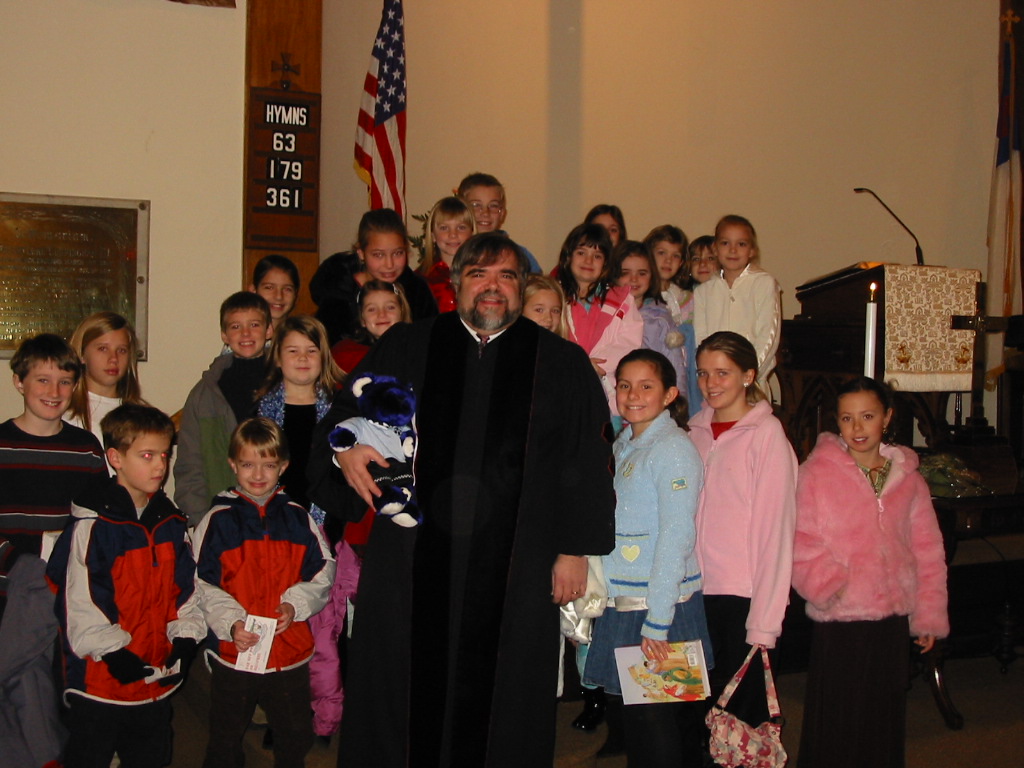
During the children’s sermon in last Sunday’s worship service, I showed the children a special gift I had received in the mail a few days before: a stuffed animal called Sheena the Prayer Bear. The bear had been sent to me by the first-grade Sunday School class of the Presbyterian Church in Westfield, New Jersey. Kathy, a friend and former student of mine, is director of Christian education at that church. She suggested my name as someone for whom the first-graders could pray.

This Prayer Bear project is a way of teaching the children about prayer. The children actually made these stuffed animals (with some adult assistance, no doubt), and are sending them out to people around the world for whom they’re praying.

Today, Kathy sends me an e-mail link to the portion of the church’s website that describes Sheena’s "assignment." Kathy had suggested I send a photo of myself with the prayer bear, so I decided to send her two: one of me, and another that was taken during the children’s sermon at our church. These photos are now on the Westfield church’s website, along with the text of the e-mail I sent to the first-graders in response.


It’s a touching way to be remembered – and another reminder of the power of prayer. I keep hearing about how many people are praying for me, in so many different places. There’s something about the ordeal of cancer that makes one feel very alone at times, and this sort of thing truly helps.

Monday, January 09, 2006

January 9, 2006 - A Talk with the Surgeon


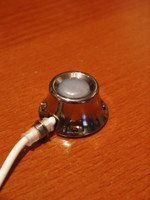
Around noon today, I visit Dr. Aron Gornish, the surgeon who will implant the port-a-cath for my chemotherapy treatments. After introducing himself, Dr. Gornish reaches into the pocket of his lab coat and pulls something out. He starts swinging it around in his hand – kind of like the way Harpo Marx swings a coin attached to the end of a string. "Want to know what this is?" he asks, stopping the object’s orbits and showing it to me. He tells me it’s an implanted port: an example of the type of device he will place under my skin, near the collarbone.

It’s about the size of a stack of four or five nickels. In the center of the metal circle is a white, dome-shaped area, into which the chemotherapy IV needle will be inserted, through the patch of my skin that will cover it. Coming out of one end of the device is a thin tube made of some sort of elastic material, that will go into the vein.

Dr. Gornish quickly explains the surgical procedure, in rather more detail than I can easily comprehend. I get the gist it, though: he will make a tiny incision in my neck and thread a tiny wire down through my jugular vein, until it reaches a certain point inside the vein in my upper chest that is his target. Then he’ll make another incision near my collarbone, and implant the port under the skin.

He shows me several small holes around the diameter of the metal circle. He’ll use these to suture the device to a layer of muscle, so it doesn’t move. Then – I think I’m getting this right – he’ll cut into the vein at the proper place, and use the wire to pull the end of the catheter down into proper position inside it.

All this will take about an hour, during which time I’ll be sedated.

I ask how soon after the surgery the device may be used – whether we’ll need to allow any time for healing. No need for that, he replies – the port can be used immediately.

It’s a good thing, as it turns out. My surgery is scheduled for a week from tomorrow: Tuesday, January 17th. When I call Dr. Lerner’s office to tell them the date of the surgery, they confirm that my first chemotherapy treatment will be the very next day, January 18th.

The port will stay in my body for as long as necessary – probably a good while after the chemotherapy treatments are finished, Dr. Gornish says, just to make sure it won’t be needed again for subsequent treatments. The device will remain visible as a bump in the skin. The chemotherapy nurse will do what’s necessary to maintain it, flushing it after each treatment to prevent infections. If I go more than a month between treatments, I’ll need to come in to Dr. Lerner’s office for this periodic maintenance.

On the way back home from the doctor’s office, I stop at Costco to do a little household shopping. One of the things I regularly buy from that warehouse store is a jumbo-sized container of shampoo. My tastes in shampoo are rather simple: unlike my daughter, who fills the bathroom with a whole assortment of hair-care concoctions, I stick to a single brand and use it exclusively. It’s about time to stock up again, I think to myself. I put a bottle into the shopping cart. But then I remember: I’m on the verge of four and a half months of chemo. I’ve got more than enough shampoo at home, still, to last me several weeks. After that, I may not have any hair to wash. Feeling a bit strange about all this, I put the shampoo back on the shelf.

January 8, 2006 - Intoxicated By My Illness

One of the classic definitions of preaching I learned in seminary was that put forth by the 19th century preacher, Phillips Brooks. He said preaching is "truth communicated through personality." His point is not that preachers are some sort of prodigies in the personality department, but that preaching is quite a different activity than most other forms of communication. In the pulpit, for good or for ill, who the preacher is and what the preacher has to say are strangely commingled.

Even so, I’ve always been hesitant to inject too much of my own personal experiences into my sermons. It usually feels presumptuous to talk about myself in that setting – even though, on the infrequent occasions when I do, I nearly always get lots of positive comments at the church door. People seem to appreciate this sort of sharing, as long as it’s not overdone (and believe me, I’ve heard more than enough sermons in which it has been).

In times of personal crisis in particular, I find that my own personal narrative nearly always finds its way, eventually, into the larger narrative of the pulpit. Such is the case today, as I spend the last several minutes of my sermon talking about the difficult news I received on Friday (the revised grading of my cancer from indolent to something more aggressive). I had earlier decided to scrap my plans to preach a two-days-late Epiphany sermon on the visit of the Magi, and talk instead about the Sago, West Virginia mining disaster that’s been so much in the news this week. That story seemed to offer a natural opportunity to discuss the theological problem of suffering.

But after Friday’s news, I realize that I myself am suffering – not from any physical pain, but rather from the emotional blow of hearing that word "aggressive" applied to my malignancy. It would be impossible to address this topic without sharing something of my own story. I do, and it seems to work out OK.

The late writer and literary critic Anatole Broyard writes about something similar in his book of essays, Intoxicated By My Illness (New York: Clarkson Potter, 1992). Broyard wrote this little book as he was struggling with the advanced prostate cancer that would eventually take his life. Here’s what he says, from his perspective as a writer, about the therapeutic power of narrative:

"Just as a novelist turns his anxiety into a story in order to be able to control it to a degree, so a sick person can make a story, a narrative, out of his illness as a way of trying to detoxify it.... I felt a bit like Eliot’s Prufrock, who says, ‘I am Lazarus, come from the dead,/ Come back to tell you, I shall tell you all.’ Like a convert who’s had a vision, I wanted to preach it, to tell people what a serious illness is like, the unprecedented ideas and fantasies it puts into your head, the unexpected qualms and quirks it introduces into your body. For a seriously sick person, opening up your consciousness to others is like the bleeding doctors used to recommend to reduce the pressure" (pp. 20-22).

Funny that Broyard uses the word "preaching" to describe his feverish, late-in-life essay-writing...

Bringing my own narrative into the pulpit still feels like a risky thing to do, so I don’t think I’ll preach that kind of sermon all that often. (Besides, it may be a moot point anyway – because once I’m deep into chemotherapy, I may either feel too sick to preach, or be ordered to stay away from crowds so as to shelter my compromised immune system.)

Saturday, January 07, 2006

January 7, 2006 - No Time Like the Present?

This is a day of letting people know about the new grading of my lymphoma, and the imminent start of chemotherapy. Yesterday evening I sent out a lot of e-mail reminders to friends and family, asking them to be sure to read yesterday’s blog entry, and I’ve received a number of supportive phone calls and e-mails in return. (Thanks to all of you – you know who you are!)

Dr. Portlock returns my phone call in the early afternoon. Nothing new from her – it’s just as Dr. Lerner told me. I ask her if she knows of any other treatment options besides R-CHOP, and she says no, that’s the international standard for the kind of cancer I have. Is there anything more she thinks Sloan-Kettering can do for me, that Dr. Lerner can’t do for me locally? No, there isn’t. But Dr. Lerner and I should feel free to call her in the future, if we’d like to consult about treatment. OK, I’ve got my second opinion now. I thank her for all her help.

Today I’ve been puttering around with a lot of minor tasks, mostly trying to keep my mind off the treatment that’s coming. One e-mail, from a cousin who’s been dealing with a chronic health condition for years, puts a different spin on it. His take is, why wait? Now that you know you’ve got to receive chemo, why not pressure your doctor to get that porta-cath into you and start the drip as soon as possible? The intervening days will only be filled with anxiety, so why not save yourself the mental agony and move things along?

In our conversation yesterday, Dr. Lerner seemed willing to have me start treatments this coming Friday, rather than waiting till the following Wednesday (he sees patients in the office only on Wednesdays and Fridays). It was only after I reminded him that our previously-scheduled appointment is not until late afternoon that he suggested starting treatments the following Wednesday. I think he would have been willing to have me come in earlier in the day on Friday and get started, but he also sensed my bewilderment at the abrupt change in plans and was cutting me a little slack.

I’m going to take my cousin’s advice and consider the possibility of moving things up. Once I find out from the surgeon on Monday how soon he can put the porta-cath in, maybe I’ll call Dr. Lerner back and ask about opening up the IV drip valve on Friday after all.

That would be Friday the 13th. My unlucky day. (Not that I’m superstitious – it seems to be poetic justice, that’s all.)

Now, to the main (and much-procrastinated) task of today: writing tomorrow’s sermon. This one may get a little personal. I’ve decided to scrap my previously-announced topic and present a sort of case-study about faith, based on a story that’s been in the news. In the midst of the dreadful emotional roller-coaster ride of the friends and family of the lost West Virginia miners, one man seemed to be saying that his faith was riding on the outcome. He told a reporter that, as long as it seemed the twelve miners had been lost, he had been doubting his faith; but then, when the initial report came in that they had been found alive – the report that, in a cruel twist, later proved to be false – he saw God’s hand at work.

Do we believe because God blesses us? Or do we believe just because – because of who God is, and who we are? It’s a very personal question for me right now. I wonder if I’ll be able to offer a convincing answer.

Friday, January 06, 2006

January 6, 2006 - Everything Changes

Late this afternoon, I am sitting behind my desk at the church, when I receive a phone call from Dr. Lerner that changes everything.

He tells me he has just received a call from Dr. Portlock, who has informed him that the pathologists at Sloan-Kettering have been conducting a more in-depth analysis of my biopsy slides. The experts have changed their minds about the type of cancer I have.

It's still non-Hodgkin lymphoma, but it's no longer "follicular center cell" – the diagnosis we've been assuming for the past month or so has been correct. The new watchword is "diffuse mixed small and large cell." He tells me this is an "intermediate-grade" cancer – halfway between indolent and aggressive. Dr. Portlock has recommended to Dr. Lerner that I begin the R-CHOP chemotherapy regimen immediately (the CHOP chemotherapy combination, plus Rituxan).

The clinical trial is now out of the question. That study is limited to patients with indolent lymphoma, and I've just been booted out of that club. Everything I've been assuming has been true about my case – about the inept lymphoma crooks driving their clunky old dump truck down the shoulder of the freeway – is now false. Their getaway vehicle has morphed into a sportscar.

Suddenly, things are moving very quickly indeed. Do I have a surgeon, Dr. Lerner asks me? No, I don't have a surgeon. I've never had a surgeon. No problem – he'll have one of his office staff set up an appointment with a good one, preferably on Monday. He wants the porta-cath put in right away.

I have a vague awareness that there must be some other questions I want to ask him, but suddenly it's like the gears of my mind have become gummed up with sticky molasses. I ask a few inane questions that lead him to repeat things he's already said – a very patient man, is Dr. Lerner – before I thank him and hang up.

I stare into space for a long time, vaguely aware that I'm experiencing a sort of emotional shock. Numbly, I look at the calendar on my PDA. Monday's my day off, but Tuesday and Wednesday are chock-a-block with important meetings, in which I'm expected to play a major role. I've been working for days to prepare for a couple of these. I call Dr. Lerner's office back, and ask to speak with the person who's contacting the surgeon. When, exactly, do they anticipate the surgery taking place? (If I have to cancel out of some of these things, I'd better start doing it soon.)

No time has been wasted, I discover. In just five or ten minutes' time, they've already made a Monday-morning appointment for a consultation with Dr. Aron Gornish. Someone – not realizing I was at the church – apparently called over to the house just moments before, and left a message with Claire about the appointment time. (I wonder what sense Claire is making of this; as rapidly as these events are unfolding, I've had no time to call her with the news.) Dr. Lerner's office assistant says I can discuss the timing of the surgery with Dr. Gornish, but she reminds me that Dr. Lerner wants it to take place as soon as possible. Knowing that it's now late afternoon on Friday, I ask if she can have Dr. Lerner call me back at home to answer some further questions. She says she'll pass the message along. (It's going to be a long weekend, I think to myself, if I can't find out more about what's ahead.)

I call Dr. Portlock's office as well, and ask her receptionist to ask the doctor to call me. I don't expect Dr. Portlock will tell me anything all that different from what Dr. Lerner has already said (after all, he got his information from her). But somehow I think that, if I hear the news directly from her, it may be easier to accept. Her receptionist tells me she'll probably call me back early this evening – or if not by then, on Monday.

I can hear the sounds of Diane and Dottie – our church secretaries – in the outer office, putting on their coats to leave for the day. I step out and inform them about the change in plans. This is all very new, I tell them. I'm not sure exactly what it all means. They express concern. Moments later, I too am on my way home.

I'm there in a flash, because – as anyone who knows our church is aware – the manse is just across the street. I walk through the house looking for Claire, but everything is silent. She's gone out on some errand. There's a post-it message by the kitchen phone, with Dr. Gornish's name and the time of the appointment. I wonder what she made of the message. I call her cell phone, but she doesn't have it on. I leave a voice mail asking her to call me right away, but I know there's little chance she'll get it. I'll just have to wait till she gets back from wherever she's gone.

I pick up my copy of Dr. Elizabeth Adler's Living With Lymphoma, and find "diffuse mixed large and small cell lymphoma" in the index. It's odd, but the index directs me to a section with the heading, "Aggressive Lymphomas." There's no mention of "intermediate grade." I go to the computer and start googling the phrase. I learn that, according to at least some authorities, the three-tiered grading of NHL as indolent, intermediate and aggressive has been dropped in favor of a simpler two-tiered division: indolent and aggressive. "Diffuse mixed large and small cell lymphoma" belongs to the second category.

So, in a matter of minutes, my cancer has gone from indolent to aggressive. That sure makes my day. No wonder Dr. Portlock and Dr. Lerner were so determined to get started with the chemo.

Claire returns a few moments later – from a hospice emergency call – and hears my story. She responds wonderfully. Just listening. Just being there. What could she say, really? She doesn't try. She just stands there next to the chair where I'm sitting, stroking my hair. We had been planning to go out to a restaurant for dinner tonight – kind of a "we survived the holidays" celebration. We cancel those plans. We have phone calls to wait for, that make our flippant use of the word "survived" sound trivial.

Dr. Portlock never does call, but Dr. Lerner calls back an hour or two later. I confirm with him that we're no longer talking "follicular." Yes, it's still "B cell." No, it's not a different diagnosis – it's still lymphoma. Just another larger type of cell, in addition to the smaller ones. That’s linguistic hair-splitting, it seems to me – to say this isn’t a changed diagnosis – but I let it pass. I suppose he’s technically correct (it’s a change in grading, not diagnosis), but it certainly does affect the treatment plan.

What does "intermediate grade" mean for me, as a patient? Not a whole lot, he replies. The treatment is the same: the R-CHOP chemo regimen we were thinking about originally. It just means we no longer have time to consider various other options, but need to get going right away. Many patients with this type of cancer respond well to treatment.

Is my prognosis any different now? I tell him I remember hearing that indolent NHL isn't curable, but that some of the more aggressive types – while more dangerous initially – can be cured. Is that true of "diffuse mixed small and large cell"? Not really, he says. The "large and small cell" refers to the fact that I have both types of cells in my body. There are still some indolent cells that will behave as earlier predicted, but there are also some aggressive cells as well.

This is just great, I think to myself. Now I've got two gangs of crooks to chase: the ones in the dump truck and the ones in the sportscar. I've got the worst of both worlds. Well, at least the R-CHOP treatment works on both.

How did this change in diagnosis happen, I want to know? Did the pathologist make a mistake? Not really, Dr. Lerner replies. The Sloan-Kettering pathologist probably made a quick analysis while we were sitting in Dr. Portlock's waiting room, then either took a second look later or – more likely – "shopped it around" to several fellow pathologists, who together came up with the more complete analysis.

No, that's not what I meant. Did the local pathologist down here at the Jersey Shore make a mistake? I don't recall exactly what Dr. Lerner said in response to that, but it wasn't a definitive answer, either way.

I ask Dr. Lerner about timing. He says I can get the porta-cath put in any time next week. We'll keep our original appointment for Friday, to discuss the treatment plans in detail. I'll probably start the chemo a week from this coming Wednesday. Three treatments, three weeks apart. Then a CT scan, followed by three more treatments. Then another CT scan, "to see where we are." Each treatment will last about four hours.

Thinking about it a few moments later, I do remember reading in the Adler book that the grading of NHL is an extraordinarily difficult task, requiring a very detailed pathological analysis. I feel very, very glad that we went for the second opinion – even if it raised my hopes high for a couple of days, before slamming them down further with this revised diagnosis.

Yes, everything is different now.

Wednesday, January 04, 2006

January 3, 2006 - Second Opinion


Today is my long-awaited appointment with Dr. Carol Portlock at the Memorial Sloan-Kettering Cancer Center in New York City. Not only is it my first time visiting Sloan-Kettering, it's also the first time I've driven in the city for years. Whenever we go into Manhattan, we typically take the train and the subway, to avoid playing bumper-car with the cabbies. But today we must carry the large, poster-sized envelope containing my diagnostic films, as well as the fragile, bubble-wrapped package containing the tissue samples, so we opt to drive. And besides, with the uncertain timing of subway transfers on an unfamiliar route, we want to be sure of being there on time.

Despite terrible weather (high winds and pelting rain from a Nor'easter), our mid-day trip into the city goes smoothly enough. Claire and I arrive at the hospital 45 minutes early and find the parking garage. Walking through the maze of corridors, eventually we find Outpatient Registration. Everything's electronic at Sloan-Kettering: no paper forms to sign, just a stylus and a computer screen. Even though this is just a second-opinion visit, I am given a permanent hospital ID card, resembling a plastic credit card: a membership card for yet another club I never asked to join.

We sit in the waiting room outside Dr. Portlock's office for more than an hour past our scheduled time. I half-expected this, because I knew it would take some time for my diagnostic films and pathology slides to be reviewed. This delay is a good thing, I keep saying to myself. Take all the time you need, Doctor. Don't rush things. Finally, we're called into an examining room. We sit awhile, then a nurse comes in and silently but efficiently takes my vital signs. A little more waiting, then a "fellow" (a doctor-in-training) comes in and examines me, taking a thorough medical history. He confirms what Dr. Lerner has been telling me: considering my early diagnosis and lack of symptoms, there is reason for optimism. He also tells me that my hemoglobin level – reported as 16 on my most recent blood test – is superb. Many NHL patients he sees at Sloan-Kettering are much lower than that. Finally, Dr. Portlock herself comes in, and after a brief physical examination, invites us to join her and the other doctor across the hall in a consulting room (a small, sparsely-furnished office, equipped with a desk and a backlighted wall display for examining x-ray and other diagnostic scans).

Sitting across the desk from us, with her colleague by her side, Dr. Portlock confirms Dr. Lerner's diagnosis: follicular center cell NHL, an indolent form of the disease. The diagnosis was a little difficult to make, she says, because the sample from my core-needle biopsy was so small. It's not so much that the overall amount of tissue was small, she says, but a large portion of the sample is scar tissue rather than malignant cells. This is fairly common in an indolent cancer, she says, because the scar tissue is the by-product of the body's past efforts to fight off the cancerous cells.

Dr. Portlock is not so quick as Dr. Lerner to suggest chemotherapy. Yes, chemotherapy is an option, in her opinion, but it's probably not the best option at this point in time. My disease has been caught early, and were it not for the large size of the mass in my abdomen, the best strategy might even be "watch and wait" (doing nothing, essentially, just monitoring the growth of my tumors with regular CT scans). Because of the size of the largest mass, Dr. Portlock suggests treatment, but with Rituxan alone – holding chemotherapy in reserve for possible use in the future.

This advice does not come as a complete surprise. The things I have been learning about indolent forms of NHL – both from my conversations with Dr. Lerner and from my reading and web-crawling – suggest that indolent NHL is very different from most other forms of cancer.

A fundamental change in perspective is necessary for those who have this disease. Most of us are naturally inclined, when we first learn of our diagnosis, to go after the cancer aggressively: blasting out all traces of malignancies, whatever it takes. No price – weakness, hair loss, nausea – is too high, to achieve the peace of mind of being declared cancer-free. Yet this aggressive approach is often futile, because indolent NHL is incurable. No matter how aggressive the chemotherapy regimen, there are always some cancerous cells that escape the chemical fusillade. Eventually they begin to replicate again. According to the latest thinking of NHL experts, the goal is not only to put patients into remission (which is not all that difficult to achieve on the first go-round, especially with the miracle drug Rituxan), but more importantly to manage the remission so it lasts as long as possible. Some chemotherapy regimens are so harsh, they can only be given once in a lifetime: better to begin the battle with the small arms first, and keep the big guns in reserve for later. (That's one school of thought, anyway.)

This is why the decision as to the first treatment is so critical: decisions made now will influence what weapons still remain in the treatment arsenal years down the road.
Rituxan, one of the newer medicines in the arsenal, is often given along with chemotherapy in treating NHL. The success rate of this one-two punch is indeed impressive. Yet in patients with indolent NHL, treatment with Rituxan alone appears to yield similar results in many cases. Because of the slow progress of the disease, increasing numbers of doctors – concluding that their patients have the luxury of time – are recommending Rituxan alone as the first line of defense.

I ask Dr. Portlock about staging: having examined the films and slides, how far advanced is my disease? The answer, she tells us, is Stage III (out of a possible four stages). Not only does the PET scan image show several enlarged lymph nodes scattered throughout my abdominal region, but there are also a couple to the north of the diaphragm, including one in my armpit. But don't worry too much about the staging, she is quick to add. Lymphoma, by definition, affects the entire lymphatic system, so it's not unusual for the disease to show up in numerous locations throughout the body.

As I think later of how to describe this, an analogy comes to my mind: that of a car chase in some action film. The police are chasing a criminal through the city streets, when they see the criminal's highly-tuned sportscar ascend an expressway entrance ramp. This is bad news for the cops, because it means the chase has just been ratcheted up to a whole new level. The villain will now be able to travel much faster and farther than before. This is similar to what happens when a cancer metastasizes from some localized tumor onto the lymphatic-system expressway. The cancer is making a break for it.

Yet indolent NHL is different. Sure, the crooks have made it onto the expressway – in fact, because this is a lymphatic cancer, they've never been driving anywhere else. Yet the difference with indolent NHL is that these inept criminals are puttering along, on the shoulder of the road, in a beat-up old dump truck that can't go faster than 40 m.p.h. That hulking old behemoth of a truck has such inertia that it's all but impossible for the cops to pull it over, but at least it's not moving very fast. This is going to be one of those drawn-out, slow-motion car chases: O.J. Simpson's white Bronco on the traffic-choked California freeways, rather than James Bond's Aston-Martin roaring down the Autobahn. Careful, deliberate strategy will be the key to success – looking far down the road to see what lies ahead, and planning accordingly.

That's the way it seems to me, anyway, as I try to make sense of all this esoteric medical knowledge. (This analogy of mine comes with the disclaimer that it reflects my thinking only, and should in no way be regarded as medically authoritative. My Ph.D. is in theology, not biology; so caveat emptor.)

There is yet another treatment option, Dr. Portlock goes on to tell us, one that can be combined with Rituxan. She suggests that I could possibly be eligible for a clinical trial now being conducted by one of her colleagues at Sloan-Kettering, Dr. Paul Hamlin. This is a treatment that could present certain "difficulties" for me, from the standpoint of what I would have to go through, but it's very promising.

Are you speaking of idiopathic vaccine therapy, I ask her? Yes, she says – a little surprised, I think, that I came up with that term. Dr. Lerner had first mentioned it to me, in passing, at the time of my diagnosis, and I had later read on the internet about this particular clinical trial, now being conducted all over the country by the drug's manufacturer. Sloan-Kettering is one several dozen research centers conducting the study.

A whole new approach to treating cancer, idiopathic vaccine therapy involves taking a biopsy from the patient's cancerous tissue and sending it off to a lab. In the lab, a customized vaccine is made, using the patient's own cells, which is then injected back into the patient over a period of many months. The vaccine inspires the patient's own immune system to rally and fight off the disease. This technologically-advanced treatment is the product of rapid developments in the field of microbiology, as new knowledge of the human genome has allowed scientists to manipulate the genes of cancer cells, to transform them into cancer-fighters.

This treatment is so new, it's not yet readily available. Right now, this clinical trial is the only place to get it. Even then, as Dr. Portlock tells me, I would only have a 50% chance of getting the real vaccine, at least at first: because this is a research study, half the patients get a placebo instead. All patients in the study get four initial doses of Rituxan, which is known to be effective against NHL. Everyone also gets (by injection, on a more-or-less monthly basis) another medication that stimulates the immune system – but only half the test subjects, randomly selected, get the vaccine along with these injections. The company makes custom-made doses of the vaccine for everyone, but in the case of those who receive the placebo, the vaccine is held in reserve as the patients are carefully watched, receiving CT scans every few months. When growing tumors again appear on the scans, months or even years later (indicating that the period of remission is ended), then those in the placebo half of the study will get their vaccine – later than the others, but still in time to be effective.

The "difficulties" Dr. Portlock is referring to are, first, that I would need to go back to the operating room for another biopsy of my abdominal mass – probably a laparoscopic surgical procedure this time, rather than a core-needle biopsy (so as to harvest enough tissue for the drug makers to use in manufacturing the vaccine). Second, while Dr. Lerner could probably administer my Rituxan treatments locally, I would need to travel to Sloan-Kettering on a monthly basis to receive the vaccine injections. Considering that I would be avoiding the side effects of chemotherapy, it sounds like a pretty even exchange to me.

The ethics of clinical trials are complex. Why give a patient a placebo, common sense cries out, while the real medicine sits on a shelf in some laboratory? There are several answers to such a question. First, the patients in such a study are fully informed of the possibility they may get a placebo, and voluntarily choose to go through with it. Second, the medicine that is being withheld is not yet thoroughly tested. It's not available to anyone right now, apart from the clinical trial – so those lucky enough to be in the 50% who get the vaccine are receiving something they could not get in any other way. Third, this study includes Rituxan for everyone, which is known to be effective – and which, in an indolent cancer like mine, could well be the only treatment I start with, anyway. So, the placebo group is not going untreated. They're just not getting the particular medicine that is the focus of the study.

This is shaping up to be a complicated and very interesting choice (the choice would also be dependent on whether Dr. Hamlin considers me to be a good test subject). I’ll have to see what Dr. Lerner thinks of all this, of course – whether, after speaking with Dr. Portlock, he’s on the same page in recommending Rituxan alone as the first line of defense, rather than chemotherapy. My appointment with him is on January 13th. Between now and then, there is much to think about.